When enquiring about laser cutting, it’s easy to consider the design but forget how it may be affected by thermal processes. When metal is cut by laser, intense heat is involved, which can affect the material properties. This is otherwise known as the heat affected zone (HAZ) and can leave behind various changes depending on the cutting parameters, material, and design. Understanding how HAZ develops is an important part of the laser cutting process, making sure each project achieves its desired outcome.

What Is a Heat Affected Zone?
During laser cutting, the microstructure of metal is altered due to changes in temperature. Heat is conducted into the surrounding metal, creating a gradient between the cut edge and base material. The extent of this zone depends on how much heat is input and how fast it can dissipate.
As mentioned previously, the effects of HAZ can vary significantly depending on the process and material. In some steels, rapid heating and cooling can contribute to residual stresses or distortion, which can lead to further issues in later fabrication processes. A HAZ is therefore not a defect, but a normal consequence of laser cutting, but controlling its size and effects is important for the finished component.
Signs of a Heat Affected Zone
Discolouration
When metal is exposed to heat, it displays a band of colour from the heat source. This goes from dark blue at the hottest point, starting from 600°c, to a light yellow at the outer edges, around 290°c.
Residue
For some metals, such as aluminium, a chalky oxide layer can be left behind on the metal’s surface.
Distortion
Heat causes expansion and contraction of the metal, which can result in warping or distortion, particularly on thinner or intricate components.
Cracking
Micro-cracks or weak zones can appear due to thermal stress along joints, grains or the cut edge.
Hardness
The original properties of the metal can be altered, with some metals becoming harder or softer.
Corrosion Resistance
For materials such as stainless steel, oxidation processes through heat can reduce its corrosion-resistance properties, making it more susceptible to rust.

Which Cutting Processes Create a HAZ?
Laser, plasma and flame cutting all use heat to separate metal and equally have the ability to produce heat affected zones.
Laser cutting utilises a concentrated beam and can produce a relatively narrow HAZ, while plasma and flame cutting will typically introduce heat over a larger surface area. This often means that the cutting parameters should be matched to the material and its thickness in order to achieve the desired edge quality.
Waterjet Cutting
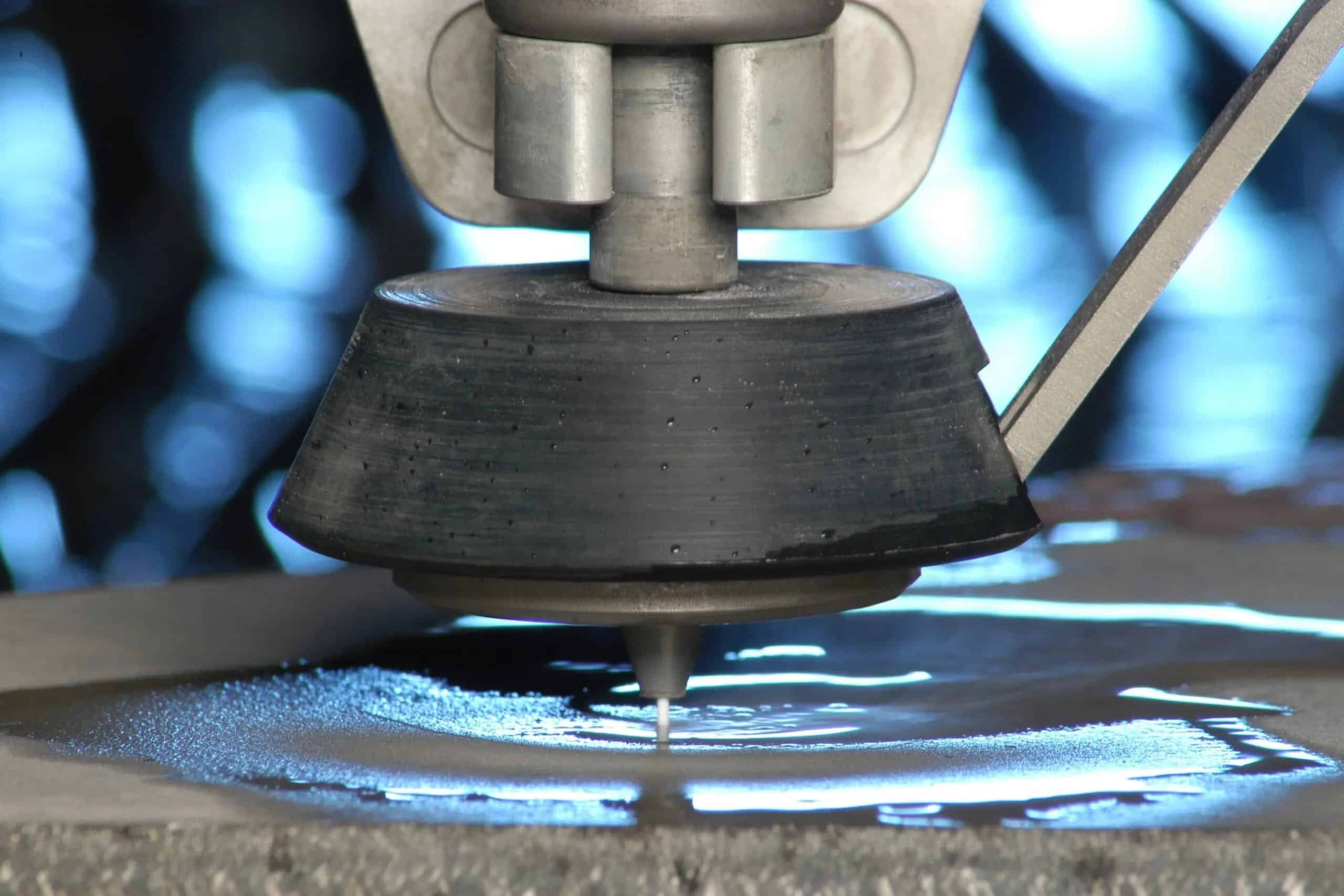
If your project requires a cut with no heat affected zone, waterjet cutting is often the most suitable option. Unlike laser, plasma and flame cutting, waterjet cutting is a cold-cutting process, meaning it does not use heat to separate the material. Instead, a high-pressure stream of water, combined with an abrasive, cuts through the material without creating a thermally affected area.
This makes waterjet particularly useful when the material properties, dimensional accuracy or edge condition must be maintained, and the potential effects of heat need to be avoided. It can also be a suitable solution for materials or applications where thermal cutting could introduce unwanted distortion, changes in hardness or other heat-related effects.
Bevel Waterjet Cutting
Where a component requires an angled or bevelled edge, and the benefits of cold cutting, bevel waterjet cutting can provide a further solution. Bevel waterjet uses the same cold-cutting principle as standard waterjet cutting, while allowing the cutting head to be angled to produce precise bevels and tapered edges.
This can be particularly beneficial for components that require preparation for welding, assembly or other fabrication processes, while still avoiding the HAZ associated with thermal cutting.
How to Reduce Heat Affected Zones?
Speed & Accuracy
The less exposure a single point has to heat, the less a HAZ can form. Technology such as laser cutting is incredibly rapid, with a narrow beam, making it an ideal choice when working across a variety of different metals.
Thermal Output
Selecting the right amount of heat for each material can avoid thermal buildup. A thin, soft metal such as aluminium will not require the same output as stainless steel.
Gases
Laser cutting with a gas such as inert nitrogen can help manage heat, whereas oxygen contributes to greater exothermic reactions.
Smart Cutting
Advanced technology avoids HAZ by cutting strategically to allow certain sections to cool before working on a particular zone again.
Waterjet Cutting
Waterjet uses a high-pressure stream of water, combined with an abrasive, to cut materials where the risk of HAZ needs to be avoided. This is a cold-cutting process and is particularly beneficial for thicker materials of up to 230mm.

Precision Profile Cutting by Charles Day Steels
At Charles Day Steels, we provide advanced laser, waterjet, plasma and flame cutting all under one roof. Our experienced team help find the most suitable cutting process for your project and material type, ensuring a flawless finish.
With extensive cutting capabilities and a focus on quality and consistency, we can support projects from individual components through to high-volume production. To discuss your future project requirements, get in touch with a member of our team at Charles Day Steels.